

Equal pay – another legislative proposal

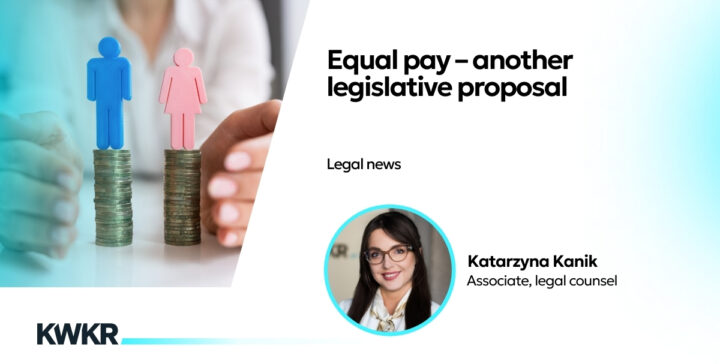
The assumptions of a draft act on equal pay for women and men have been published. The Ministry has released the assumptions of a draft act aimed at strengthening the application of the right to equal pay for women and men for equal work or work of equal value.
Purpose and context of the project
The draft implements into Polish law Directive (EU) 2023/970 of the European Parliament and of the Council, which entered into force on 6 June 2023. The deadline for its implementation into national law is 7 June 2026.
The aim of the directive is to eliminate gender-based pay discrimination by introducing pay transparency mechanisms and enforcement tools.
Although the Polish Labour Code guarantees the right to equal pay, it lacks the detailed transparency regulations required by the directive. Employees currently do not have access to the information necessary to effectively pursue claims related to equal pay.
Key solutions proposed in the draft
-
-
Job evaluation – for all employers
-
All employers, regardless of size, will be required to implement pay structures enabling them to assess whether employees are in comparable situations. Employers will have to use four mandatory criteria when evaluating the value of work:
- skills – required qualifications and competencies
- effort – physical and mental workload
- responsibility – scope of duties and decision-making
- working conditions – environment and circumstances in which work is performed
Employers may apply additional criteria or sub-criteria, provided that all are objective and gender-neutral, excluding any form of direct or indirect discrimination.
-
Transparency of remuneration criteria – for all employers
Employers will be required to define the criteria used to determine employee remuneration, pay levels and pay increases in an objective, gender-neutral and non-discriminatory manner.
Employers must ensure that employees have easy access to these criteria. For employers with fewer than 50 employees, information on pay increase criteria will be shared at an employee’s request.
-
Employee right to information – for all employers
Every employee will have the right to request information on:
• their own pay level
• average pay levels, broken down by gender, for categories of employees performing equal work or work of equal value
Job applicants will receive information on the initial pay level or pay range.
-
Accessibility of information
All pay-related information must be provided in a way accessible to persons with disabilities, considering their specific needs and ensuring easy and informed access, particularly in a digitally accessible form, at least at the level required under the Digital Accessibility Act.
-
Pay gap reporting – for employers with at least 100 employees
Employers with at least 100 employees will be required to prepare detailed pay gap reports containing information such as:
- the gender pay gap (difference in average pay between women and men)
- the pay gap in supplementary or variable components (bonuses, incentives, etc.)
- the pay gap within categories of employees
Frequency of reporting:
- every three years – employers with 100–249 employees
- annually – employers with at least 250 employees
Reports will cover the previous calendar year and will be submitted using an IT tool provided by the President of the Central Statistical Office.
-
Right to request explanations
Employees, employee representatives, the National Labour Inspectorate and the equality body will have the right to request further explanations and details regarding data contained in the pay gap report, including explanations of gender-based pay differences.
The employer will have 14 days to provide a justified response.
-
Joint pay assessment – for employers with at least 100 employees
Employers will be required to conduct a joint pay assessment if all of the following conditions are met:
- the report shows a pay gap of at least 5% in any category of employees
- the employer has not justified the pay gap using objective, gender-neutral criteria
- the employer has not remedied the unjustified gap within six months of submitting the report
-
Penalties
The draft provides for fines ranging from PLN 2,000 to PLN 60,000 if an employer or a person acting on their behalf:
- fails to evaluate the value of jobs
- fails to provide access to remuneration criteria
- fails to share requested information with an employee
- fails to prepare a pay gap report
- fails to submit required information
- fails to conduct a joint pay assessment
- fails to take corrective measures
- includes in an employment contract provisions prohibiting employees from disclosing their pay
The penalties correspond to other labour law sanctions — proportionate, but also deterrent.
- Legal protection
The draft introduces detailed legal protection provisions for cases of violating rights or obligations related to equal treatment in employment with respect to the right to equal pay for equal work or work of equal value.