18.09.2026
Platform Work Act – New Rules for Platform Work
Platform Work Act – New Rules for Work Performed Through Digital Platforms
Work performed through digital platforms has long raised questions about where flexible cooperation ends and an employment relationship begins. The draft Act on work performed through digital labour platforms aims to address some of these issues by introducing comprehensive rules on employment status determination, algorithmic management and the protection of individuals working through platforms.
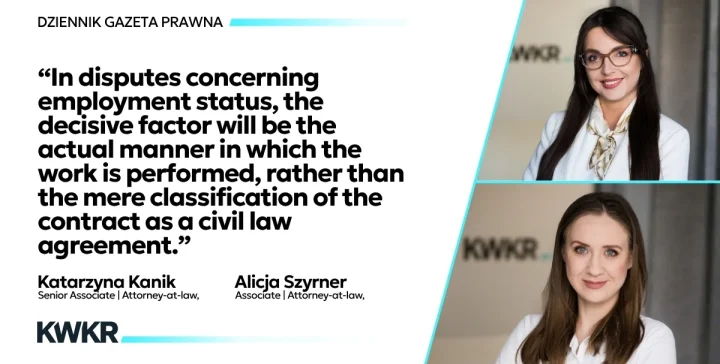
In an article published in Dziennik Gazeta Prawna, Katarzyna Kanik and Alicja Szyrner discuss the key solutions proposed in the draft legislation implementing Directive (EU) 2024/2831.
Employment Status Under Greater Scrutiny
One of the most significant elements of the draft legislation is the introduction of a rebuttable presumption of an employment relationship. The actual conditions of cooperation, rather than the title of a contract, would play a decisive role in determining employment status. Relevant factors may include the degree of control exercised by the platform, the way work is organised and the platform’s influence over access to assignments.
Algorithmic Management and Greater Transparency
The proposal also introduces new obligations related to automated monitoring and decision-making systems. The aim is to increase transparency regarding algorithms that affect working conditions and to limit the possibility of certain decisions being made solely through automated systems.
New Obligations for Digital Platforms
The proposed regulations would also introduce reporting obligations towards the National Labour Inspectorate, strengthen protections for individuals performing platform work and establish specific procedures for determining the existence of an employment relationship.
We encourage you to read the full article by Katarzyna Kanik and Alicja Szyrner, published in Dziennik Gazeta Prawna.